Powering AI/Compute with
Nature's Efficiency
OpenGPU™ is an AI/compute-first open-standards initiative transforming the future of computing with nature-inspired, open-standard hardware that scales from IoT to data centers, with 100x efficiency gains.
What is
Neuromorphic Computing?
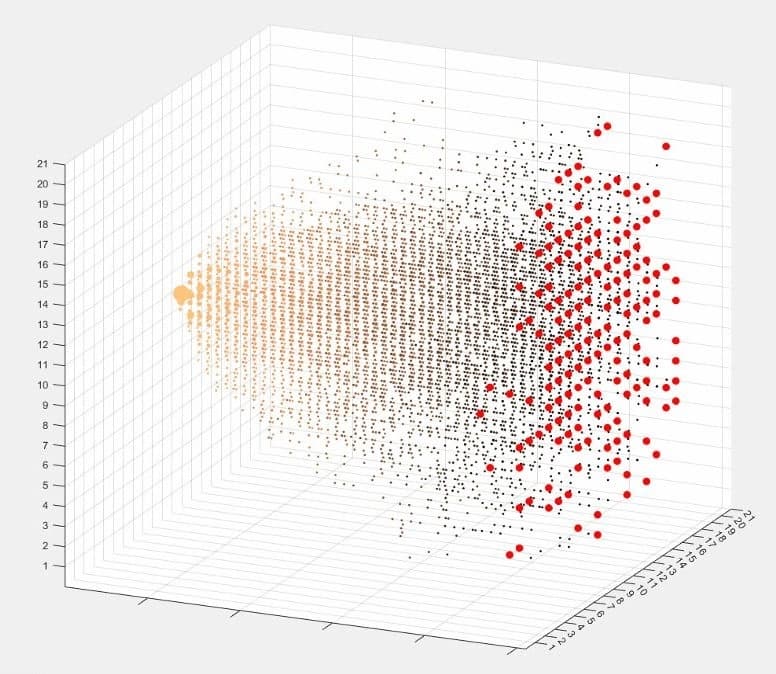
Inspired by nature, and modeled after the way insect & animal brains work, neuromorphic computing offers a leap forward in adaptability, speed and energy efficiency, by applying key lessons from the structure and function of biological neural systems. This includes : leveraging time (e.g. temporal computing), randomness & noise (e.g. stochastic computing), and enormous interconnectivity (e.g. multi-dimensional neural connectivity fabrics).
Chart: Sandia Lab
How does OpenGPU advance
Open Computing?
Whether analog, Josephson junction, carbon nanotubes, or just plain-old digital CMOS; OpenGPU supports fundamental improvements in AI/Compute-first architectural advances, that can also help Graphics (and importantly: not the other way around). OpenGPU does this by:
- Funding research and development projects in academia as well as private labs
- Funding focused prototyping works that help the developer community
OpenGPU focuses firstly on efforts that are readily manufacturable, realizable in today's processes, and have/will have tangible near-term benefits, as well as accelerating fundamental rethinking of the computing architectures, especially in the field of Neuromorphic computing. OpenGPU prioritizes open interoperability and re-usability, rather than proprietary silo'd works, or one-off engineering efforts, and to be the tide that raises more boats.
In order to deliver on that promise, all work must contribute back into the open standard, to ensure interoperable hardware/software interfaces; they must firstly be readily adoptable by the ecosystem, as well as the trust of developers.
Why do Biological Systems inspire?
Edge-friendly. Low power. Self-learning. Enormously powerful. Biological brains show us how to achieve all four—processing locally, adapting on the fly, and doing more with less.
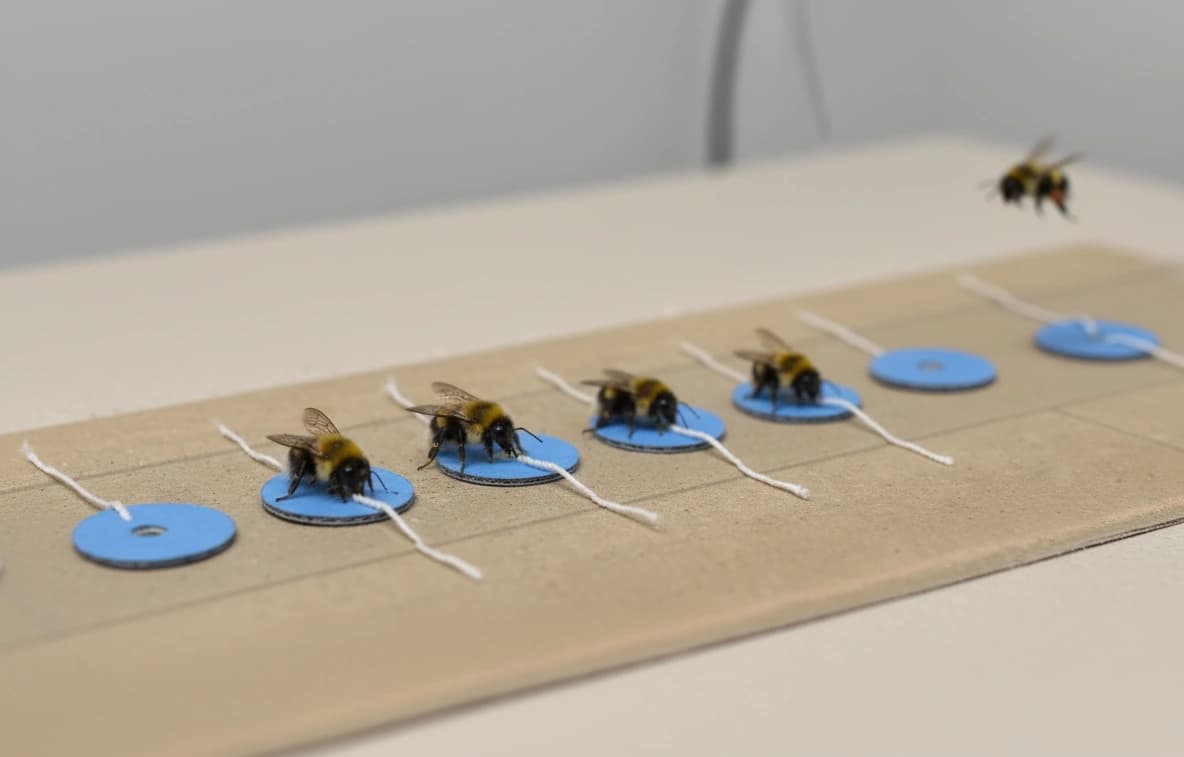
bee Brain
- Neurons
- ~1 million
- Training
- Bees training bees
- Power Budget
- 1 sip of sugar-water* (<21 microwatts**)

dog Brain
- Neurons
- 530 million
- Training
- Operant conditioning
- Power Budget
- 1 dog biscuit (3~8 watts*)

human Brain
- Neurons
- 86 billion
- Training
- Parental conditioning, education & experience
- Power Budget
- 13~25 watts*
Training Compute Requirements Are Increasing Exponentially
Model complexity and parameter memory are growing exponentially. Traditional computing can't keep up. Biology shows us a better way.
Source: Veronika Samborska (2025) - "Scaling up: how increasing inputs has made artificial intelligence more capable" Published online at OurWorldinData.org

Annual Energy Consumption
Environmental Cost
Nuclear Power Needed
Our Values
We bridge cutting-edge neuroscience, research institutions, universities, and disruptive startups with industry demand for scalable, manufacturable solution, driving the next generation of AI and computing.
Real-World Applications
From insect-inspired drones to edge AI devices, OpenGPU technology enables applications that were previously impossible due to power constraints.